Golden Glaze

Merch Plan

Review of the quarter-zip proof, competitor teardown, and what to actually launch first.

INTERNAL — NOT FOR DISTRIBUTION

The Verdict

Start here
The design is fine. The product is wrong. The quarter-zip is the most expensive, highest-inventory-risk format in the fourth-most-popular merch category. Launch a cap, a tee and a sticker instead — tees and hats are the two largest slices of the only purchase-mix figure we have, at a fraction of the capital and materially less dead-stock exposure. Not zero: caps and stickers can sit too. Keep the quarter-zip, but demote it to staff uniform plus a presale-only retail test.
n/a
Quarter-zip is not a tracked category in any data we have
$60–80
Retail needed to hold margin
$55
Voodoo Doughnut's entire price ceiling
7
Sizes if you run XS–3XL, per colorway

Corrections to the first version of this page

This document was rewritten on 14 September 2026 after review. Five claims in the original did not hold:

  • "Six sizes." XS–3XL is seven. And the real range comes off the chosen blank's spec sheet, not off this page.
  • "~81% of what people actually buy" applied to cap + tee + sticker. The 81% is tees plus hats only. Stickers are not in that dataset.
  • "Near-zero dead stock." Caps and stickers carry no sizing risk. They can still go unsold. There is no zero-risk SKU here.
  • The cost table was labelled "landed." It is a set of industry component ranges with no freight, setup or digitizing in it. It is not a quote and does not support a retail price yet.
  • Competitor catalogues were read as demand. A catalogue proves what a brand chooses to offer. It says nothing about units sold, and product position on a page is not a sales rank.

The underlying research is unchanged; the overclaiming on top of it is gone.

The three decisions on the table

  • What to launch first — recommendation: cap + tee + sticker, not outerwear.
  • What the quarter-zip is for — recommendation: staff uniform first, retail only via presale.
  • Which logo goes on the chest — recommendation: the solid badge, not the thin arched wordmark.

What The Purchase-Mix Data Shows

Reported purchase mix — one write-up of Square data

Merch purchase mix

T-shirts
58.2%
Hats
22.8%
Hoodies
11.5%
Totes
7.5%

Quarter-zip is not a tracked category. At best it lives inside that 11.5% sweatshirt slice — and it is the priciest, slowest-turning item in it. Tees and hats together account for 81% of the four categories reported here.

Read this carefully. These four percentages are quoted accurately from a Food Institute write-up of Square data, but that article gives no sample size, no geography, no unit-vs-revenue denominator and no measurement period for the mix itself — the "Q3 2025" label in the piece belongs to its merchant-adoption stats, not to these numbers. Treat it as directional context for a tee/hat-led pilot, not as an allocation model. Stickers are not in this dataset at all, so no combination that includes a sticker can be summed to 81%.

Who merch works for

Square's data covers bars, breweries, cafés and restaurants — 56.5% of breweries, 22.9% of cafés and 17% of bars now sell merch. But the qualifier in the same writeup matters more than the headline:

"Merchandise makes sense for edgy, cool restaurants, cafes, breweries, and coffeehouses. It also makes sense if the business is located in a tourism destination."

Headwind Golden Glaze is seven neighborhood shops in DFW. Not a tourist landmark people buy a souvenir of — yet. That is the honest constraint on how big this line can get in year one.

Competitor Teardown

Full catalogs, real prices, pulled 2026-09-14

Voodoo Doughnut 47 SKUs Zero quarter-zips

Probably the most merch-successful independent donut brand in America. Their entire ladder:

TierExamplesPrice
Stickers (6 SKUs)Logo, sticker-of-the-month, flash tattoo sheet$2–6
Pins & keychainsVoodoo doll pin, matchbook, skateboard$4–10
MugPink Hole coffee mug$18
TeesMost of the range sits at $20$20–30
CapsSnake, skull rope, corduroy$20–30
Beanies & totesPom beanie, Pink Box tote$30
CrewnecksBad Day, Whimsical Logo$45
Hoodies — their ceilingStained Glass, 2003$55

Read: the range is weighted toward $20 tees and cheap impulse items, and the brand best positioned to charge $65 for outerwear doesn't sell a quarter-zip at all — it stops at $55. That ceiling is the useful signal.

Evidence quality: a catalog proves what a brand chooses to offer, not what customers buy. Read this as how an experienced operator structures a range and where they cap price — not as sales data. The Square figures above are the only genuine demand data on this page.

Dutch Bros 81 SKUs One quarter-zip

BandSKUsWhat's there
Under $1035Drink lids at $4.95 — the cheap end of the range is the widest part of it
$10–2013Patches, license plate holders, pet gear
$20–3014Bucket hats, gift cards
$30–504Long sleeves, Regulars Club crewneck
$50–7013Hoodies at $50 — and the $65 "Get Up Early" quarter-zip
$70+2$75 windbreaker

Read: a quarter-zip can work in this category — at $65, as the second-priciest item in the line, backed by 1,000+ locations and a genuine cult. It is the flex you earn, not the thing you open with. Note that 43% of their catalog is under $10.

Randy's Donuts Icon-led

Launched merch with t-shirts and hats, and has since added hoodies, sweatshirts, caps, mugs and magnets. Their entire merch equity is the giant donut on the roof — an icon, not a slogan. People buy Randy's merch as proof they were at an L.A. landmark.

Read: the durable premium in food merch comes from identity and iconography, not from a line of text.

The Concepts

Four directions — review art, not production files

Open production flag: there are two browns

This page is built in #5c3b18. The Golden Glaze GHL theme uses #4A3A26. The gold and cream families agree; the brown does not.

Neither is a confirmed brand standard. No verified palette spec exists in any file reachable from here, so picking one is a decision Jack makes, not a value anyone reads off a document. There is no Pantone, thread or ink match for either, and none should be invented from a hex value.

Resolve it against physical garment and thread samples under daylight before any decoration spec or vendor quote is issued. Re-matching after sampling is a real, avoidable cost.

Everyday badge cap Lead

Dark chocolate 5-panel or low-profile dad cap, flat embroidery or woven patch. Front badge approx 2.35 in W x 2.00 in H. One adjustable size — the cleanest bridge between brand visibility and low sizing complexity.
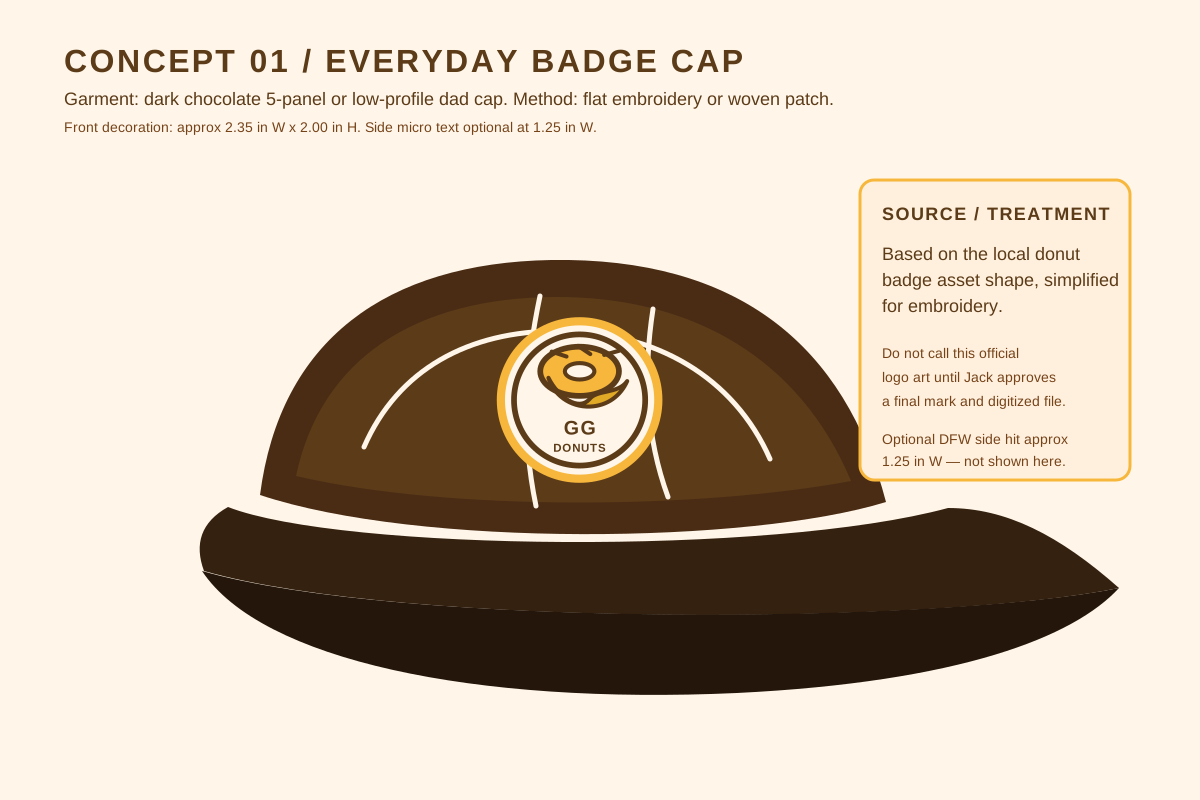
Everyday badge cap concept

Product-led donut tee

Pepper / washed black tee, 2-colour screen print or DTF. Front left chest approx 3.5 in W; back print approx 10.5 in W x 13 in H. The back graphic is built from verified menu items — glazed, chocolate, sprinkles, cinnamon sugar, jelly filled, apple fritter, kolache, coffee — not from invented bestsellers.
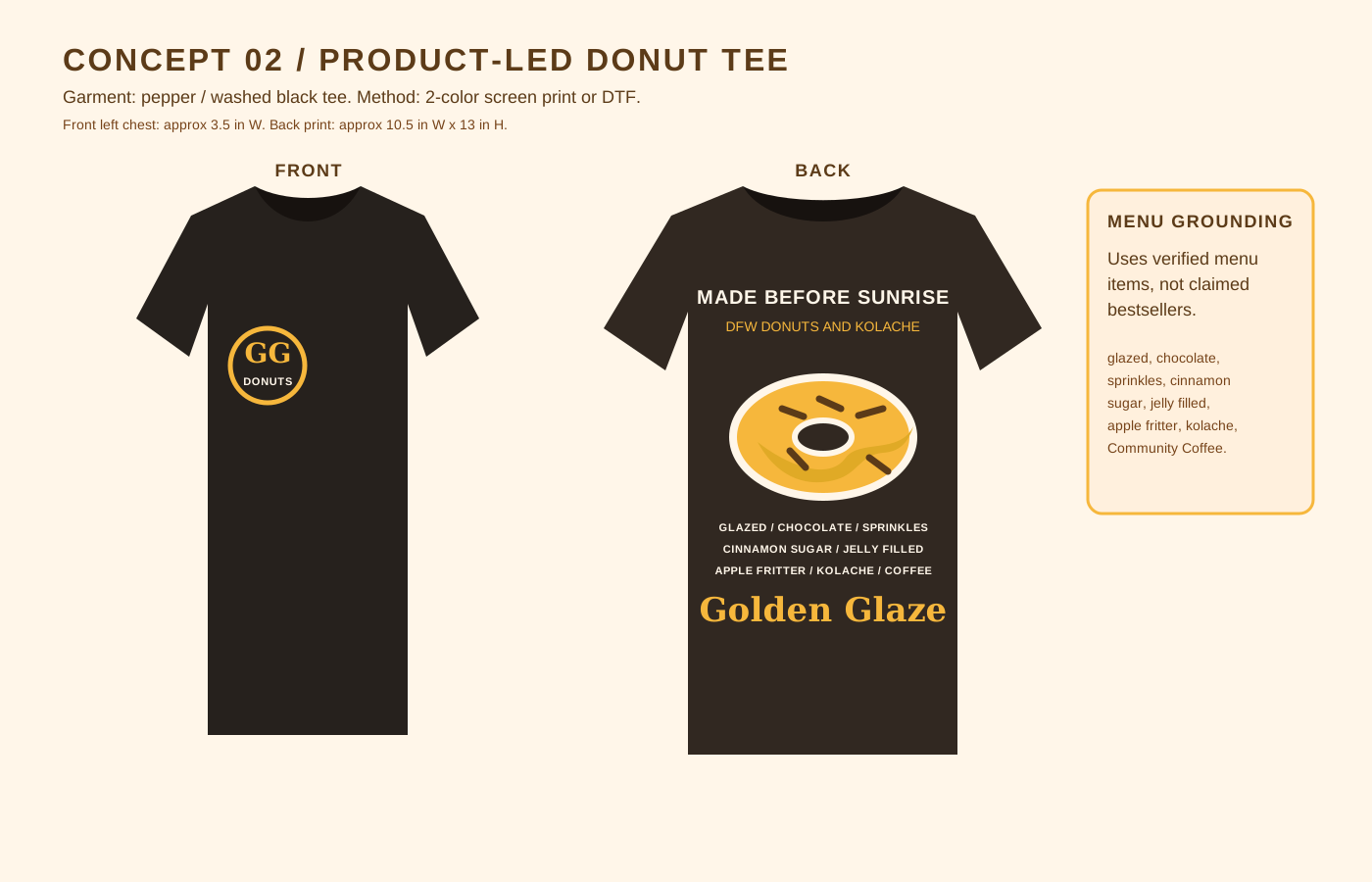
Product-led donut tee concept

Golden Era quarter-zip Sample / preorder only

Espresso heavyweight fleece, long sleeve. Front embroidery approx 2.4 in W; back graphic approx 10 in W x 7 in H. Fixes the problems in the original proof: darker body, solid chest badge, larger back, higher contrast. Still the wrong thing to open inventory with.
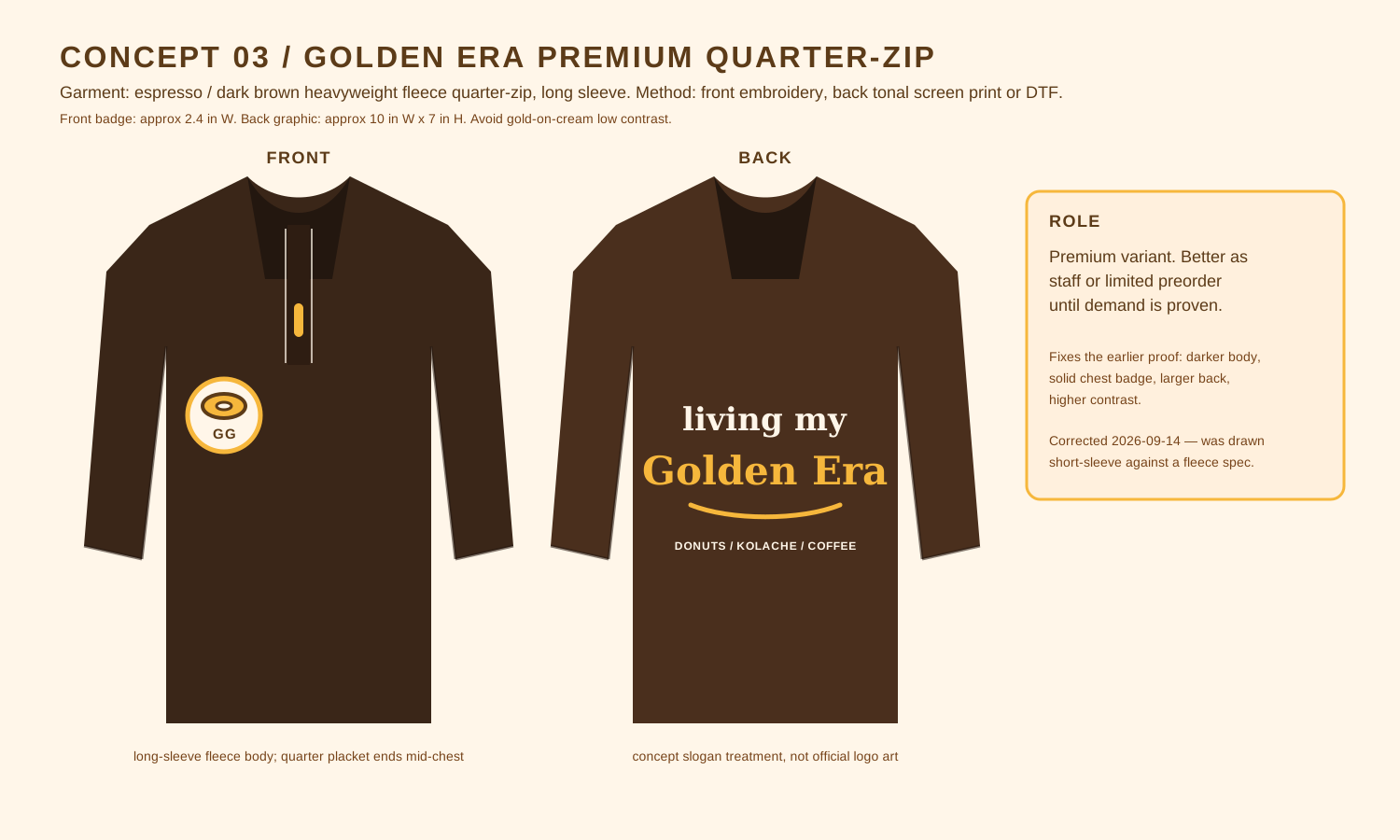
Golden Era quarter-zip concept

Sticker companion

3 in die-cut vinyl or a 3 x 4 in sheet, full-colour digital print. The badge route is the one to run — a bare donut doesn't attribute to Golden Glaze. Cheap and it advertises, but it is still inventory.
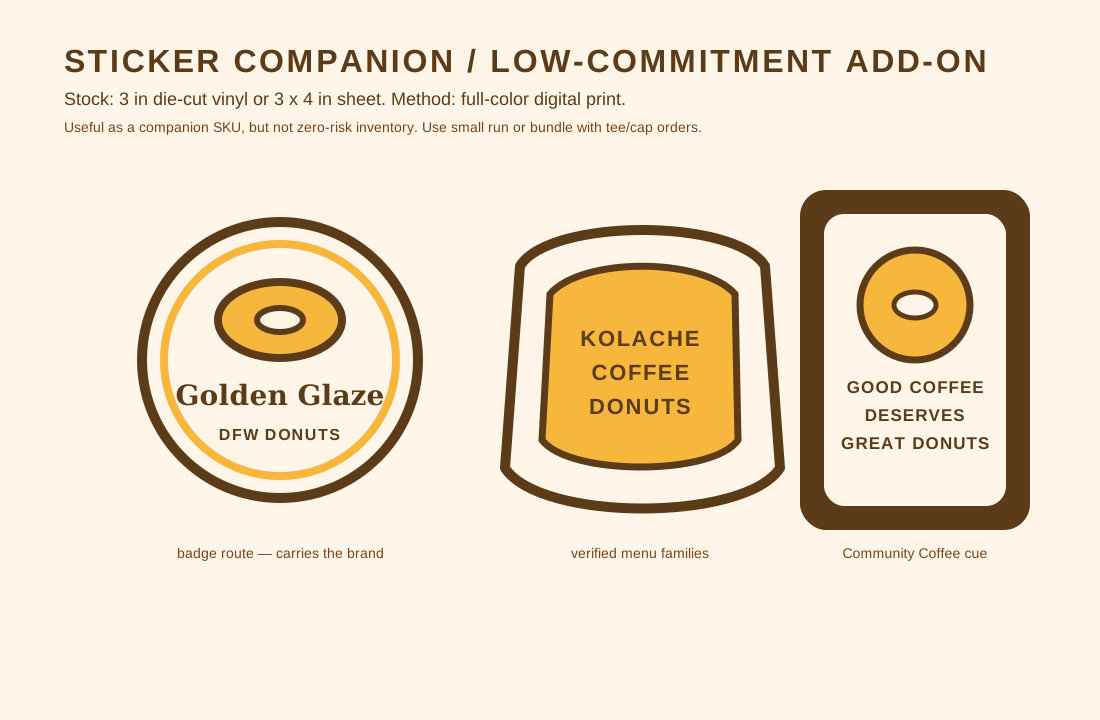
Sticker companion concepts

What these are not

  • Not production files. Not digitized. Not stitch-ready.
  • Not official logo art — the badge is a concept simplification of existing local assets and needs Jack's approval as a mark before it goes on anything.
  • Dimensions are provisional and change once a blank is selected and its decoration constraints (max stitch count, print area, colour count) are known.
  • Garment colour names — dark chocolate, espresso, pepper — are directions, not blank SKUs.

Thin type and small menu copy will not survive embroidery at these sizes; that is a digitizing review, not a drawing decision.

Design Review

The original quarter-zip proof, as submitted

These aren't three options

Rows 1 and 3 carry an identical chest logo, and all three backs are the same lockup with minor weight and colour shifts. The only real decision on the sheet is which back treatment — and row 3 is the pick, because it is the only version with enough type weight to survive on a cream body.

Problems to fix before approval

  • Chest logo won't hold. The thin arched monoline wordmark on rows 1 and 3 is below the practical minimum stroke width for embroidery at that size — it will blob and the letter counters will fill. Use the solid badge from row 2 on every version.
  • Gold on cream is low contrast. The yellow "GOLDEN" is the weakest element on all three. Keep the brown outline everywhere, darken the gold a full step, or change the body colour.
  • Back graphic sits high and small. It's up on the shoulder blades with dead space beneath it. Drop it 2–3" and scale up.
  • Cream is a bad body colour for a donut shop. Flour, glaze, coffee, fryer grease. If these go on staff they'll look destroyed inside a month.
  • The slogan is carrying the garment, not the brand. "Living My Golden Era" is the reason someone picks it up. That's a joke purchase — and joke purchases are $25 tees, not $65 outerwear. The chest badge is the real asset and it's the smallest thing on the piece.

The Math

Why the quarter-zip fails as a first SKU

Assumed cost vs. achievable price Not a quote

LineCost
Blank quarter-zip fleece$18–28
Chest embroidery$4–8
Back print (DTF)$4–6
Assumed per unit$30–40
Retail needed at 2×$60–80

These are industry component ranges, not a landed cost. They exclude freight, setup, digitizing, sampling and per-colour/per-location screen charges — and at pilot volumes setup, not the blank, is what drives unit cost. Nothing here is a vendor quote. Every price on this page is conditional on an RFQ that has not come back yet.

Voodoo's entire ceiling is $55. Dutch Bros gets $65 with brand equity Golden Glaze hasn't built yet. The price you need is above what the two best comps in the category can charge.

The counter math at the register

A Golden Glaze customer is spending $15–25 on a dozen donuts. A $65 quarter-zip asks them to roughly triple their ticket on an impulse buy. A $28 tee is an easy yes in that line. A $65 piece of outerwear is a considered purchase — and considered purchases don't happen in a donut queue.

The risk that actually bites: sizing

A full XS–3XL run is seven sizes per colourway — XS, S, M, L, XL, 2XL, 3XL — before you've sold anything. (An earlier version of this page said six. It was wrong.) You will guess the size curve wrong, sell through M/L/XL, and sit on the tails indefinitely. That dead stock is where merch programs lose money — and here it's tied up in your single most expensive unit.

The actual range has to come off the selected blank's spec sheet, not off this page — not every blank runs XS, and some run 4XL.

A cap is one adjustable size. A sticker has none. That removes the sizing problem; it does not make either one immune to sitting unsold.

The Plan

What to launch, in order

Phase 1 — the opening lineup

ItemPriceWhy
Embroidered cap$28–32One adjustable size — no sizing risk. Best margin in merch, and the badge logo is built for it. Hats are 22.8% of the reported mix. Still stockable if it doesn't move.
Tee$26–28Tees are 58.2% of the reported mix — the largest single slice. "Living My Golden Era" belongs here, not on outerwear.
Sticker$3–4Pennies to produce, impulse buy at the register, and every one is a free ad on a laptop or water bottle. Voodoo runs six sticker SKUs for a reason.

Tees and hats are the two largest slices of the reported mix, and this lineup leads with both at a fraction of the capital. The sticker is here because it is cheap and it advertises — not because it appears in that data, which it doesn't.

Sizing risk is the one risk this lineup genuinely reduces, and only on the cap and sticker. The tee still carries a full size curve. Dead stock is lower here, never zero.

Phase 2 — the quarter-zip, demoted not killed

  1. Staff uniform first, in a darker body. The team wearing it across seven shops every day is better advertising than forty units sitting in a stockroom.
  2. Retail by presale only. Post it, collect orders, then order exactly what sold. Zero inventory risk, and you learn whether demand is real before spending a dollar.
  3. Clear ~40 units on presale → do a real run. Doesn't clear → you just saved roughly $1,500 and learned something.

The free lever

From the same article, attributed to one agency executive (Steve Morris, NEWMEDIA.COM): "When a restaurant gives as little as $2 per server on merchandise add-ons, we see attachment rates jump 40%." That is a vendor's reported experience with his own clients — not a Square experiment, not a controlled study, and it comes with no baseline, sample size or duration. Treat it as a hypothesis to test locally, not a number to plan against. It plausibly works best when staff already wear the product and can raise it conversationally.

Golden Glaze already runs Discord daily checkins — the spiff can be tracked there without building anything new.

Open questions

  • Staff uniform or retail drop? Still unanswered, and it changes the whole design call — staff means logo-forward, darker body, cheapest durable blank; retail means the back graphic is the product and should be bigger and louder.
  • Embroidery or DTF? The chest detail implies embroidery, the back implies print. Running both on one garment is a real cost jump and should be priced before approval.
  • Blank weight and brand? A heavyweight fleece versus a thin one is the whole quality perception at a $50+ price point.

Note on the slogan

An earlier verbal note called "Living My ___ Era" a fading 2023 trend. On checking, no supporting data was found either way — treat that as opinion, not a finding. The sizing and price-point arguments above are the ones backed by numbers.

Sources

Everything above is traceable
  • Reported merch purchase mix — quoted from a Food Institute write-up of Square data (Anna Kinder, 5 December 2025). No sample size, geography, denominator or measurement period is given for the mix itself: Restaurants Leverage Branded Merch to Generate Income Ahead of the Holidays. Also the source of the $2 staff-spiff / +40% attachment anecdote (attributed to one agency executive, not a study) and the "tourism destination" qualifier.
  • Voodoo Doughnut — full 47-SKU catalog and prices pulled from voodoodoughnutshop.com.
  • Dutch Bros — full 81-SKU catalog and price bands pulled from shop.dutchbros.com.
  • Randy's Donuts — merch mix per their own announcements; randysdonuts.com.
  • Blank and decoration costs — industry component ranges, not quoted, and not landed: freight, setup, digitizing and sampling are all excluded. No vendor RFQ has been returned. Every price on this page is conditional until one is.
  • Competitor catalogues — Voodoo, Dutch Bros and Randy's pages establish assortment and displayed price only. They are offer-side evidence. They do not show units sold, sell-through or category demand, and page position is not a sales rank.
  • Concept mockups — produced 14 September 2026 as review art. Not production files, not approved marks, not vendor proofs.